Young Leader of the Month
Namatai Kwekweza
249 views
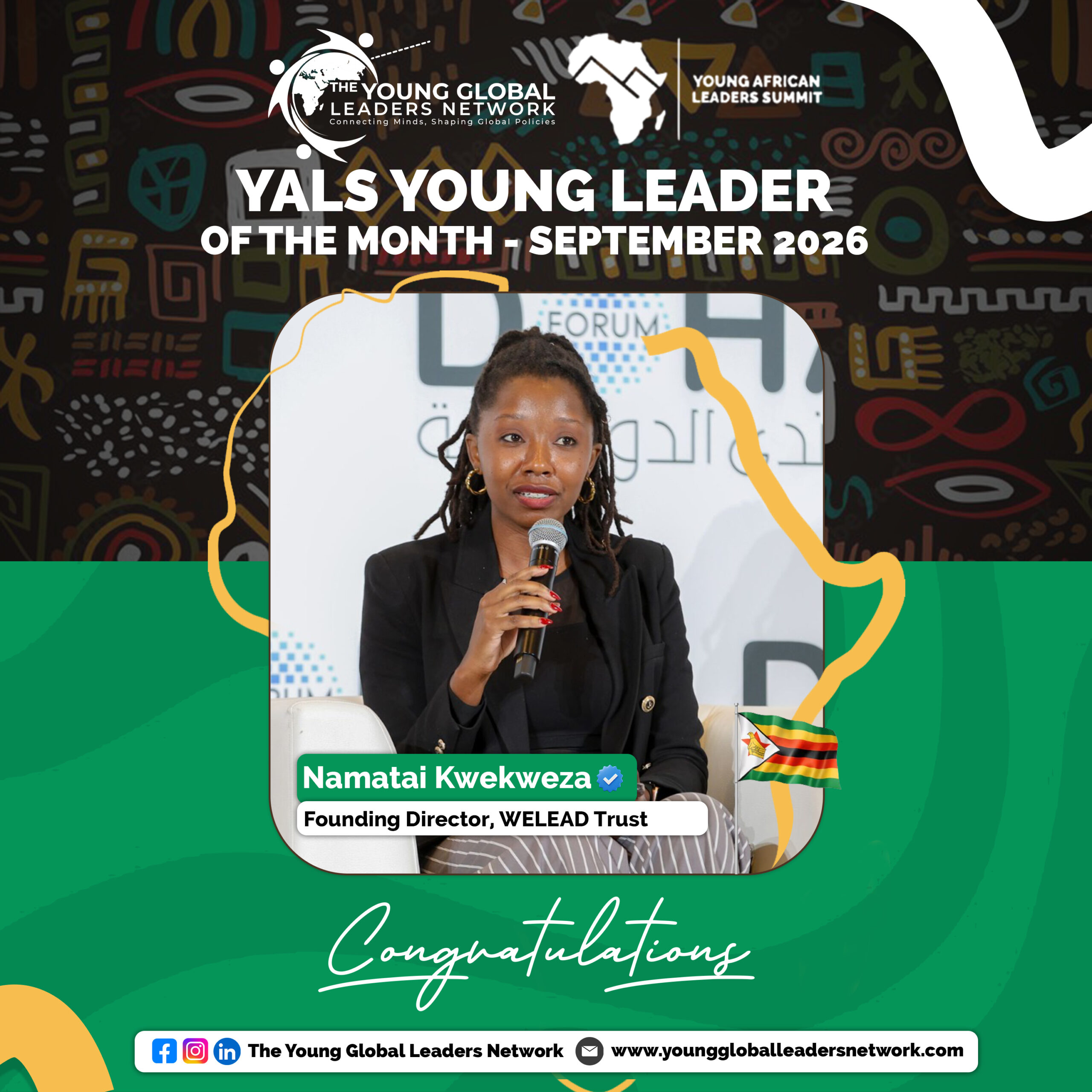
At 18, Namatai Kwekweza was already thinking beyond her own future.
While many young people her age were beginning to navigate adulthood, she was asking a different question: how could young Zimbabweans become more informed, confident and active participants in the decisions shaping their country?
That question led her to establish WELEAD Trust, an organisation focused on developing young leaders and strengthening youth participation in civic and political processes.
Nearly a decade later, Kwekweza has become one of Zimbabwe’s prominent young voices on democracy, constitutional reform, human rights and women’s participation in public life.
Her journey has been marked by both recognition and resistance. She has received international awards for her advocacy, but she has also faced arrest and intimidation because of the positions she has taken.
For Kwekweza, however, youth leadership has never appeared to be about having a prominent title. It has been about creating opportunities for young people to understand their rights, participate in public affairs and have a say in the future of their country.
Kwekweza founded WELEAD Trust when she was 18, with the belief that young people needed more than encouragement to become future leaders.
They needed the knowledge and platforms to participate now.
The organisation has worked to promote political education, youth leadership and civic engagement, helping young people better understand governance and their role within it.
That work has placed Kwekweza within some of the most important conversations about Zimbabwe’s democratic future.
Her leadership has also been shaped by the recognition that women and young people often face particular barriers to participation in political and public life.
Rather than treating those challenges as reasons for young people to remain on the sidelines, she has focused on building their capacity to engage.
It is a philosophy that has followed her throughout her activism: creating informed citizens who are capable of asking questions, understanding institutions and demanding accountability.
Kwekweza’s activism has not always been welcomed.
In 2020, she was arrested after speaking out against a proposed constitutional amendment in Zimbabwe. She was later acquitted.
The incident brought greater attention to her work and highlighted the risks faced by young activists operating in Zimbabwe’s civic space.
Yet Kwekweza continued.
Her advocacy has remained focused on democratic governance, constitutionalism, civil liberties, women’s rights and meaningful youth participation.
That persistence is an important part of understanding her leadership.
For many young activists, the challenge is not simply finding something to say. It is continuing to speak when doing so becomes difficult.
Kwekweza’s record suggests that she sees civic leadership as a responsibility rather than a temporary campaign.
Her work has increasingly attracted international attention.
In 2023, Kwekweza received the inaugural Kofi Annan NextGen Democracy Prize, recognising her contribution to defending democratic values and mobilising young people.
The recognition was followed in 2025 by one of her most significant achievements yet.
She was named a recipient of the German Africa Prize, becoming the youngest person in the history of the award to receive the honour.
The prize recognised her work around democracy, youth empowerment, constitutional reform and the rule of law.
The recognition has helped bring her work to a wider international audience, but Kwekweza has continued to emphasise the importance of the young people and communities behind the work.
Her story is therefore larger than a list of awards.
It is about the growing demand from young Africans to be taken seriously as participants in the political and social development of their countries.
Kwekweza’s experience reflects a challenge facing many African countries.
The continent has one of the world’s youngest populations, yet young people are often underrepresented in the institutions where decisions about their lives and futures are made.
This creates a gap between Africa’s demographic reality and its systems of governance.
Young people are frequently described as the leaders of tomorrow. But for Kwekweza, that language risks overlooking the contribution they can make today.
Her work through WELEAD Trust has been built around the idea that young people should have the tools to understand their societies and participate in shaping them.
That approach is particularly relevant as African countries confront questions about democratic participation, institutional accountability, economic opportunity and the role of citizens in governance.
The question is no longer simply whether young Africans are ready to lead.
It is whether existing systems are ready to give them meaningful opportunities to do so.
It is this aspect of Kwekweza’s journey that makes her recognition particularly relevant to the Young African Leaders Summit (YALS).
YALS was established around the idea that Africa’s future depends on a generation of young people who are willing to take responsibility for the continent’s development and who are equipped to turn that responsibility into action.
Kwekweza represents that approach in practice.
She did not wait for a government appointment or an established institution to create a space for her. She began building one herself.
More importantly, her work has not been limited to advancing her own voice. Through WELEAD Trust, she has worked to create opportunities for other young people to understand their rights, develop leadership capacity and participate in civic life.
That emphasis on building people as well as institutions is central to the kind of leadership YALS seeks to recognise.
YALS also places importance on leadership that extends beyond personal achievement. The objective is to identify young Africans whose work contributes to stronger communities, institutions and societies.
Kwekweza’s journey fits within that wider picture.
Her work connects individual leadership with civic responsibility and demonstrates how a young person can use an organisation as a platform for broader social change.
There is another reason Kwekweza’s story stands out.
Her leadership began before international recognition made her widely known.
She was 18 when she founded WELEAD Trust. She was in her early twenties when her activism brought her into conflict with authorities. And she was still only 26 when she became the youngest recipient of the German Africa Prize.
The sequence is important.
The awards did not create her leadership. They recognised work that was already taking place.
That distinction offers a useful lesson for young Africans watching her journey.
Leadership does not necessarily begin when someone is given a position. It can begin with identifying a problem, organising people around an idea and accepting responsibility for trying to change something.
Kwekweza’s experience demonstrates that age does not have to determine the scale of a person’s contribution.
Her recognition also comes at a moment when conversations about youth leadership are becoming increasingly important across Africa.
Young Africans are building businesses, leading civil society organisations, creating technology solutions, entering public service and demanding greater accountability from institutions.
But the continent’s demographic advantage will only become meaningful if young people are given the opportunity to translate their energy and ideas into lasting contributions.
That requires more than celebrating young leaders after they succeed.
It requires investing in youth leadership before the recognition comes.
Kwekweza’s own journey offers a compelling example of this principle. Her work began with creating spaces for young people, long before the international community began recognising her own contribution.
The German Africa Prize has given Kwekweza a larger platform, but it has also placed greater attention on the issues she has spent years addressing.
She has expressed her intention to use the recognition to amplify the voices and stories of young people in Zimbabwe and across Africa.
That ambition is significant.
Because the most consequential measure of leadership may not be how far one person rises, but how many others are given the opportunity to rise with them.
For YALS, that is what makes Namatai Kwekweza a fitting Young Leader of the Month.
Her story is one of courage, civic responsibility and institution building. More importantly, it is a story about refusing to accept that young people must wait their turn before contributing to the societies they call home.
At 26, Kwekweza has already spent years demonstrating that young Africans can do more than inherit the future.
They can organise for it, speak for it and begin building it themselves.
Nominate an outstanding young African leader for the YALS Young Leader of the Month spotlight.